
Origins and phenomena
Spirit photography
A Boston engraver, a plate with a transparent face, the portrait of Lincoln's widow, fraud trials and fairies in an English garden: how photography promised to make the invisible visible.
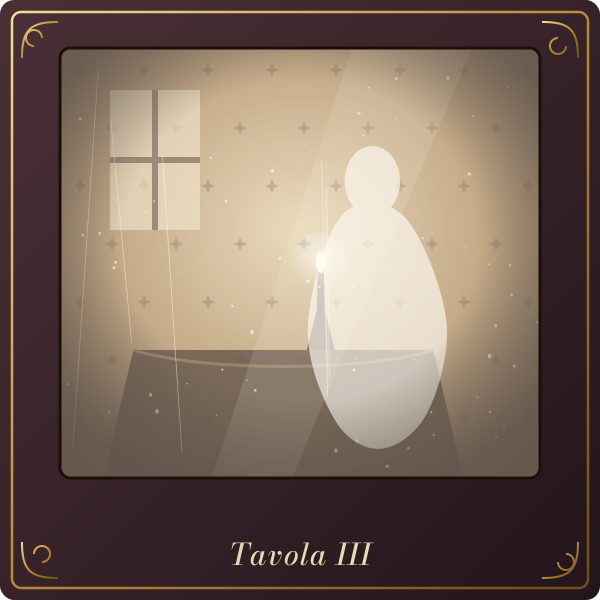
In the nineteenth century photography seemed like magic turned into science. The plate recorded what stood before the lens with a fidelity no painter could match, and it was said that the camera could see even what escaped the human eye. It was inevitable that someone would try to photograph the invisible.
The Boston engraver
In the early 1860s, in Boston, the engraver and amateur photographer William H. Mumler developed a self-portrait and found beside himself the transparent figure of a young woman. He recognised her — so he said — as a cousin who had died years before. The news went round the spiritualist circles and Mumler opened a studio: for a considerable fee, clients sat before the lens and received a portrait in which the face of a dead loved one appeared behind them.
The trial
In 1869, having moved to New York, Mumler was arrested and tried for fraud. Satisfied clients testified, as did photographers who explained how to obtain the same effect by double exposure; among the prosecution witnesses was the famous showman Phineas T. Barnum, who produced a “spirit” photograph of himself beside the ghost of Abraham Lincoln, made specially for the occasion. The judge acquitted Mumler for lack of evidence, while declaring himself convinced that it was a deception.
The president's widow
Mumler's most famous portrait is that of Mary Todd Lincoln, the widow of the murdered president, made around 1872: the woman sits in a dark dress, and behind her a pale figure rests its hands on her shoulders, with features recalling those of her husband. The image moved many believers, while sceptics saw in it proof of the cruelty of a trade that exploited grief.
Prepared plates and double exposures
The techniques varied: plates already exposed with an image before the sitting, double exposures, accomplices moving behind the client covered with veils during the long exposure times. In Paris the photographer Édouard Buguet enjoyed enormous success until, in 1875, the police seized in his studio the dummies, cardboard heads and clothes used to make the spirits; at his trial he confessed and was convicted, although some clients went on believing in his portraits.
The Cottingley fairies
The phenomenon lasted through the Great War, when many families sought contact with their fallen sons. In 1917 two cousins in Yorkshire photographed tiny fairies dancing in the garden at Cottingley. Arthur Conan Doyle, creator of Sherlock Holmes and a fervent spiritualist, published them in 1920 as proof of the existence of nature spirits. Only in the 1980s did the two women, by then elderly, admit that the fairies were paper figures cut out of an illustrated book.
What these images tell us
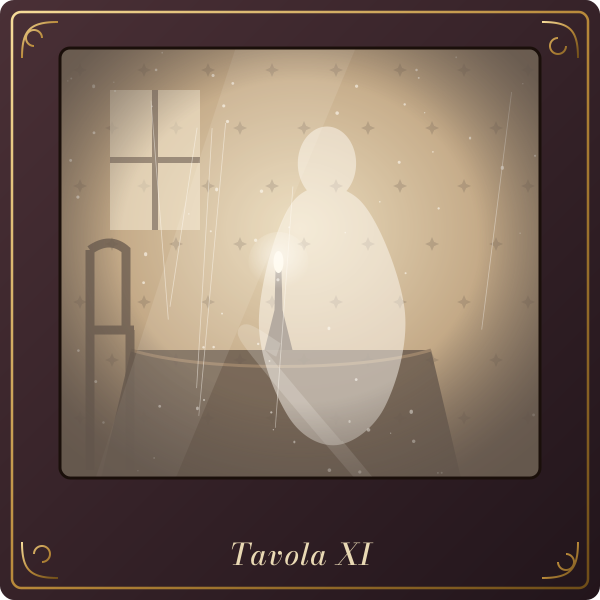
Spirit photographs are now kept in museums and studied as extraordinary documents of nineteenth-century culture: of mourning, of faith in technology, of the wish not to lose those we love. At a time when photography was changing the way the dead were remembered, those transparent figures promised something more than a memory. The plates accompanying the entries on this site are inspired by their aesthetic, but they are original, openly declared illustrations, not period photographs.
Watch the video
Sources and further reading
- W. H. Mumler, The Personal Experiences of William H. Mumler in Spirit-Photography (1875)
- Procès des spirites (Paris, 1875)
- C. Chéroux et al., The Perfect Medium: Photography and the Occult (2005)
- L. Kaplan, The Strange Case of William Mumler, Spirit Photographer (2008)
Read next
Hydesville 1848: the Fox sisters and the birth of spiritualism
A wooden house in New York State, two young girls, mysterious knocks in the dark and an alphabet for talking with the dead: the night of 31 March 1848 that gave birth to the spiritualist movement.
Table-turning: the craze that conquered Europe
In 1853 drawing rooms all over Europe gather around little tables that turn, tilt and knock out words. Faraday puts them to the test, Chevreul explains them, and the planchette is born.
Mesmer and animal magnetism
A Viennese physician, a tub with iron rods, the convulsive crises of Parisian salons and a commission with Franklin and Lavoisier: animal magnetism prepared the ground for the spirits.
