
Famous mediums
Eusapia Palladino, the medium from Minervino Murge
An illiterate orphan from Apulia who became the most studied medium in the world: Lombroso, Richet, the Curies and researchers from Cambridge and Columbia examined her for twenty years. Marvel or trickery?
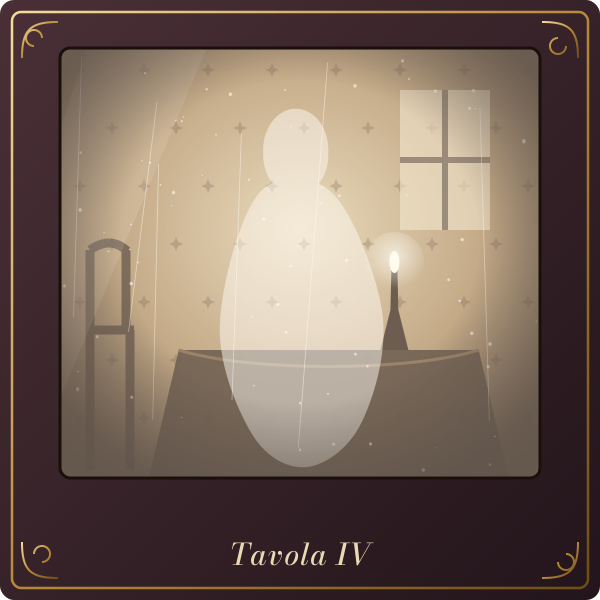
No nineteenth-century medium was examined by as many scientists as Eusapia Palladino. For more than twenty years doctors, physicists, psychologists and astronomers from half of Europe sat with her around a table, in darkness or half-light, holding her hands and feet to control her. Some came away convinced they had witnessed inexplicable phenomena; others caught her cheating. Her case remains one of the most debated in the history of the paranormal.
From Minervino to Naples
Eusapia was born on 21 January 1854 in Minervino Murge, in Apulia. Orphaned early, she came to Naples as a child and worked as a servant. She never learned to read and write properly. In a family that took her in, during a table séance, it was noticed that in her presence the phenomena became extraordinary: the table rose completely, knocks were heard, objects moved. So her career began.
The challenge to Lombroso
In 1888 the Neapolitan scholar Ercole Chiaia wrote an open letter to Cesare Lombroso, the famous physician and criminologist from Turin, who then considered spiritualism a superstition. He invited him to examine an extraordinary medium in person. In 1891, in Naples, Lombroso accepted and came away from the sittings deeply shaken. His conversion caused a stir throughout Europe and opened the laboratories' doors to Eusapia.
The great examinations
In 1892 in Milan a committee of scholars, including the astronomer Giovanni Schiaparelli, examined her in a series of sittings, with results judged partly positive and partly doubtful. In 1894, on the island of Roubaud in France, she was met by the physiologist Charles Richet, the physicist Oliver Lodge and the psychologist Frederic Myers. Between 1905 and 1907, in Paris, she was studied by researchers of the General Psychological Institute, and Pierre Curie attended the sittings shortly before his death.
Exposures
But Eusapia was also caught out. In 1895, at Cambridge, researchers from the Society for Psychical Research found that she managed to free a hand or a foot from control, making her neighbours believe they were still holding both. She herself admitted that, if not properly controlled, she would “help” the phenomena. In 1908, in Naples, three investigators experienced in conjuring tricks, sent by the same Society, concluded on the contrary that some phenomena could not be explained by fraud. During a tour of the United States in 1909–1910, a group of Columbia University professors had her secretly watched by a man lying under the table, who saw her lift it with her foot.
The fascination of a riddle
What really happened at Eusapia's séances? The explanations proposed range from highly skilled fraud to collective suggestion, up to the hypothesis of still unknown faculties. The very fact that first-rank men of science devoted so much time to an illiterate woman from the provinces says a great deal about the culture of the time, when the boundaries between physics, psychology and spiritualism had not yet been drawn.
Eusapia Palladino died in Naples on 16 May 1918. In Minervino Murge her name is remembered as that of a famous and awkward daughter whom the whole world had tried to understand.
Sources and further reading
- C. Lombroso, Ricerche sui fenomeni ipnotici e spiritici (1909)
- E. Feilding, W. W. Baggally, H. Carrington, Report on a Series of Sittings with Eusapia Palladino (1909)
- H. Carrington, Eusapia Palladino and Her Phenomena (1909)
- E. Morselli, Psicologia e «spiritismo» (1908)
Read next
Daniel Dunglas Home, the medium who levitated
Séances in the light, accordions playing by themselves, live coals in his hands and a levitation out of a London window: the Scottish medium who enchanted emperors and scientists and never asked for a fee.

William Crookes and Katie King
One of the great chemists of the nineteenth century, a teenage medium and a “spirit” who let herself be photographed and touched: the story of Florence Cook and the research that put Crookes' reputation at stake.

Leonora Piper, William James's "white crow"
A Boston housewife in trance whom no one ever managed to expose: for the philosopher William James she alone was enough to prove that not all crows are black.
