
Origins and phenomena
The phantasmagoria, Robertson's ghosts
In revolutionary Paris a Belgian physicist projected spectres in the darkness of an abandoned convent: the magic lantern, smoke, voices, and an audience asking to see its own dead.
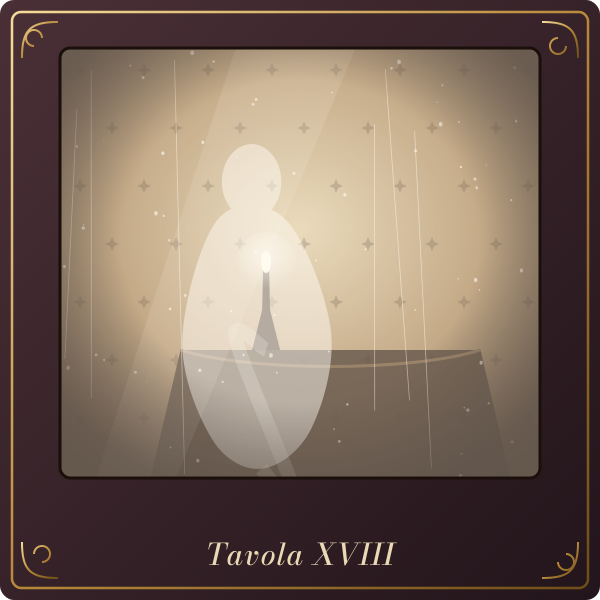
At the end of the eighteenth century, when mediums did not yet exist, ghosts were already appearing in public: for a fee, in dark theatres, thanks to technology. It was called phantasmagoria, and it was one of the most famous shows of revolutionary Paris. It showed that the eye can be deceived, but also how deep the desire to see the dead again ran.
The magic lantern
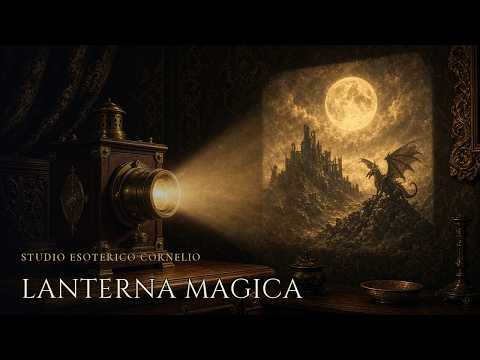
The basic instrument had existed for more than a century: the magic lantern, described in the seventeenth century and spread by itinerant lanternists, projected onto a wall images painted on glass slides, lit by a lamp and enlarged by a lens. Devils and skeletons were favourite subjects. But the audience saw the machine and knew it was a game.
Robertson's secret
The Belgian physicist Étienne-Gaspard Robert, known as Robertson, took the show to another level from 1798. In the Capuchin convent in Paris, abandoned after the Revolution, spectators were led in the dark through corridors and chapels, among tombs and funeral inscriptions. In the hall the lantern was hidden behind a semi-transparent screen; mounted on wheels, it moved forwards and backwards, so that the figures seemed to grow and come towards the audience. Smoke, the sound of bells, thunder and the music of the glass harmonica completed the effect. Ladies fainted, men raised their canes to strike the spectres.
The dead the audience asked for
Robertson made famous figures of recent history appear: Robespierre, Marat, Danton, freshly guillotined. Some spectators brought portraits of their own dead loved ones, asking to see them appear. Robertson presented his shows as experiments in physics, meant to free the public from superstition; but their success sprang precisely from emotion and fear.
Pepper's ghost
In 1862 in London another illusion caused a sensation: "Pepper's ghost", named after the chemist John Henry Pepper who perfected it. A large sheet of glass angled on the stage reflected a hidden, brightly lit actor, who looked like a transparent ghost among the actors on stage. The technique is still used today in theme parks and hologram shows.
From phantasmagoria to séances
When séances were born in the mid-nineteenth century, the public had already seen many ghosts created by technology. Critics of mediums, such as Houdini, recalled that light and darkness are the oldest tools of illusion; and spirit photographers, whose story is told in spirit photography, used double exposures as Robertson used the lantern.
Watch the video
Sources and further reading
- É.-G. Robertson, Mémoires récréatifs, scientifiques et anecdotiques (1831-1833)
- L. Mannoni, The Great Art of Light and Shadow. Archaeology of the Cinema (1994, Eng. trans. 2000)
- T. Castle, "Phantasmagoria: Spectral Technology and the Metaphorics of Modern Reverie", Critical Inquiry 15 (1988)
- J. H. Pepper, The True History of the Ghost (1890)
- M. Warner, Phantasmagoria (2006)
Read next
Hydesville 1848: the Fox sisters and the birth of spiritualism
A wooden house in New York State, two young girls, mysterious knocks in the dark and an alphabet for talking with the dead: the night of 31 March 1848 that gave birth to the spiritualist movement.
Table-turning: the craze that conquered Europe
In 1853 drawing rooms all over Europe gather around little tables that turn, tilt and knock out words. Faraday puts them to the test, Chevreul explains them, and the planchette is born.
Spirit photography
A Boston engraver, a plate with a transparent face, the portrait of Lincoln's widow, fraud trials and fairies in an English garden: how photography promised to make the invisible visible.
